
Key Takeaways
- A written plan helps organize service dates, replacement parts, and expected expenses.
- Your owner’s manual is the primary reference for approved fluids, service intervals, and specifications.
- Tires, brakes, batteries, filters, fluids, and suspension components deserve consistent attention.
- Part decisions should account for fit, quality, warranty coverage, installation requirements, and long-term value.
- Denver’s temperature swings, mountain travel, winter road treatment, and high elevation should shape the plan.
Why Luxury Vehicles Need a Detailed Parts Plan
Luxury vehicles combine refined engineering with systems that require precise care. Performance brakes, advanced driver-assistance features, electronically controlled suspension, sophisticated climate systems, and high-output electrical components can all affect maintenance decisions. A thoughtful plan helps owners address wear before it becomes an inconvenient repair, particularly when finding the right Bentley replacement parts is part of preserving proper fit and function. That planning matters in Denver, where a single year may include dry summer highway trips, freezing mornings, heavy rain, mountain elevation changes, and travel on roads treated for winter conditions. Instead of waiting for several needs to arrive at once, such as tires, brake service, and a battery, owners can identify likely work early and spread decisions across the year. A maintenance plan is not a substitute for a professional inspection or manufacturer guidance. It is a practical record that helps an owner ask better questions, notice changing vehicle behavior, and make service appointments before a dashboard warning or unfamiliar noise becomes more serious. The best plan is specific to the vehicle and how it is used. A lightly driven weekend vehicle, a commuter navigating Denver traffic, and a vehicle that frequently travels to ski areas may have very different priorities despite having similar mileage.
Start With the Owner’s Manual
Begin with the owner’s manual and warranty booklet. These documents identify maintenance intervals, approved fluid specifications, tire sizes, warning indicators, and any service requirements tied to both time and mileage. Online advice can be useful, but it should support the vehicle-specific instructions rather than replace them.
- Record the next recommended maintenance interval and the mileage at which it is due.
- Note required oil, coolant, brake fluid, filter, and tire specifications.
- Check whether the vehicle has severe-use recommendations for short trips, stop-and-go driving, towing, or mountain driving.
- Save digital photos or scans of the most relevant maintenance pages.
Build a Simple Maintenance Calendar
A spreadsheet, calendar app, or notebook can turn service history into an easy-to-follow schedule. Start with the current date and odometer reading, then list completed work and upcoming maintenance. Set reminders a few weeks before a service is due so there is time to schedule an appointment and order any necessary parts.
- Write down the current mileage, date, and any active warning messages.
- List recent oil service, tire work, brake inspections, battery replacement, and fluid changes.
- Add the next manufacturer-recommended service by date and mileage.
- Create a watch list for items with visible wear or a recent inspection recommendation.
- Review the calendar twice each year, ideally before winter and before summer travel.
For each entry, include the part or service, current mileage, expected review point, estimated cost range, and next inspection date. This simple format makes it easier to distinguish a confirmed need from an item that only needs monitoring.
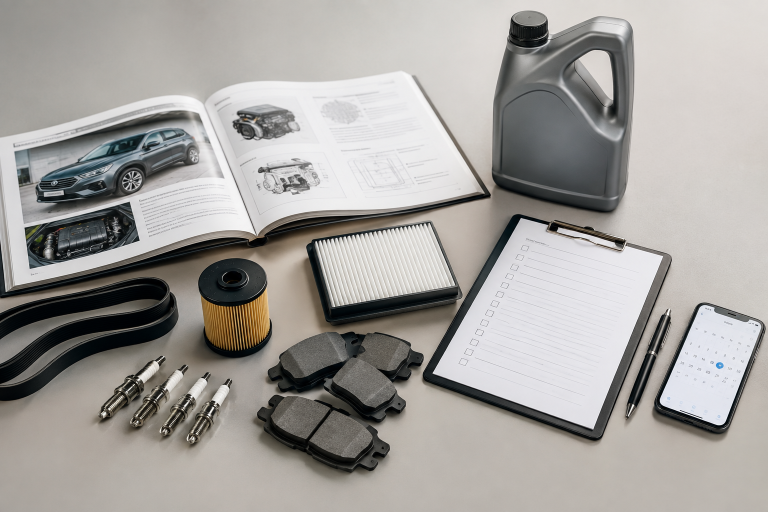
Track High-Wear Parts Before They Fail
Replacement timing depends on the model, road surface, climate, driving style, and inspection results. Still, several items deserve regular review.
- Tires: Check pressure, tread, visible damage, age, and uneven wear. The federal tire safety guidance recommends checking cold tire pressure at least monthly and using the pressure shown on the vehicle’s label or in the owner’s manual, not the maximum pressure molded into the tire sidewall.
- Brakes: Schedule an inspection when there is noise, vibration, pulling, reduced confidence in pedal feel, or a brake warning message.
- Battery: Have battery condition tested before periods of severe heat or cold, especially if starting seems slower than usual.
- Filters and fluids: Follow the prescribed intervals, and have leaks, unusual odors, low levels, or fluid discoloration evaluated.
- Belts, hoses, and suspension: Pay attention to cracking, swelling, fluid seepage, clunks, poor handling, or changes in ride height.
Compare Replacement Parts With Care
Price is important, but it is not the only factor. Original-equipment parts, high-quality aftermarket parts, and used components can serve different purposes. Safety-critical, software-connected, or difficult-to-access parts may justify a stronger emphasis on exact compatibility and warranty support.
- Confirm the part number and fitment for the vehicle’s year, trim, and equipment.
- Check the warranty, return policy, and whether labor is covered if the part fails.
- Ask whether installation requires special tools, calibration, coding, or programming.
- Consider the cost of repeating labor if a lower-cost part does not perform as expected.
Plan for Denver’s Seasonal Driving Conditions
Seasonal planning is especially valuable along the Front Range. Winter roads can expose underbody components to moisture and road-treatment residue, while summer heat and long mountain drives can add stress to tires, cooling systems, and batteries. Before a ski trip or a long summer drive, inspect tires, wiper blades, washer fluid, lights, and fluid levels. When selecting tires, consider the vehicle manufacturer’s size and load requirements, as well as the weather conditions you expect to encounter. The tire safety guidance for drivers notes that winter tires are more effective than all-season tires in deep snow, while summer tires are not designed for freezing temperatures, snow, or ice. If the vehicle will sit for several weeks, follow the storage instructions in the owner’s manual. A storage checklist may include maintaining the battery charge as directed, checking tire pressure, keeping the vehicle clean and dry, and arranging a suitable location to minimize unnecessary exposure.
Budget for Routine Service and Major Repairs
Separate predictable maintenance from unexpected repairs. Predictable expenses may include scheduled inspections, fluid service, filters, tires, and brake components. Unexpected costs can include damaged wheels, electrical faults, leaks, or suspension repairs. Setting aside a monthly repair reserve can make both categories easier to manage. Prepaid maintenance plans generally focus on scheduled services, while extended warranties or service contracts may cover selected mechanical or electrical failures. Review covered components, exclusions, deductibles, claim procedures, transferability, and cancellation terms before committing to either option.
Keep Better Service Records
Clear records support future diagnostics, warranty conversations, resale discussions, and accurate parts ordering. Keep invoices, inspection reports, tire records, warranty documents, and photos in one digital folder. Each entry should include the date, mileage, service performed, parts used, shop name, and recommended follow-up. Also record changes that may seem minor, such as a new vibration, a repeated warning message, uneven tire wear, or a noise that occurs only during cold starts. Patterns are often more useful to a technician than a vague description of a single event.
Common Questions About Luxury Vehicle Maintenance
How Often Should a Luxury Vehicle Be Serviced?
Follow the manufacturer’s schedule, then adjust attention based on age, mileage, local conditions, and use. Short trips, frequent traffic, extreme temperatures, mountain driving, and extended storage can all justify closer monitoring.
Are Original-Equipment Parts Always Better?
Not automatically. The right choice depends on the part’s purpose, engineering requirements, warranty, supplier reputation, and installation quality. Exact fit and dependable performance matter most for the specific repair.
Should Parts Be Replaced in Pairs?
Some components, including tires and certain suspension parts, may need to be replaced in pairs or sets to maintain balanced handling and performance. Follow the owner’s manual and the vehicle’s inspection recommendations.
Is a Maintenance Plan the Same as an Extended Warranty?
No. A maintenance plan typically covers scheduled services, while an extended warranty or service contract may cover specific failures. Neither should be assumed to cover every repair.
Final Checklist
- Review the owner’s manual and current service history.
- Record mileage, recent work, and upcoming factory-recommended service.
- Inspect tires, brakes, battery condition, fluids, filters, and warning lights.
- Identify parts likely to need attention within the next 12 months.
- Compare fit, quality, warranty, and installation requirements before purchasing parts.
- Create a reserve for expected maintenance and unexpected repairs.
- Store every invoice and inspection note in one place.
- Update the plan after each service visit.
A smarter maintenance plan makes luxury vehicle ownership more predictable. By following factory guidance, preparing for Denver driving conditions, monitoring high-wear components, and keeping complete records, owners can make informed decisions throughout 2026 and keep their vehicles ready for the road.